The Offida Approach: Residential Learning
Residential Learning.
Why Living Together Is One of the Most Powerful Parts of the Educational Experience
Why Living Together Makes Learning Better
Residential Learning is one of the key elements of the Offida Approach. We believe that where students live shapes how they learn. Therefore, accommodation is much more than a practical service. It becomes an active part of the educational experience.
For this reason, we do not choose accommodation only because it is comfortable or affordable. Instead, we design every aspect of our Residential Learning model to support collaboration, reflection and personal growth.
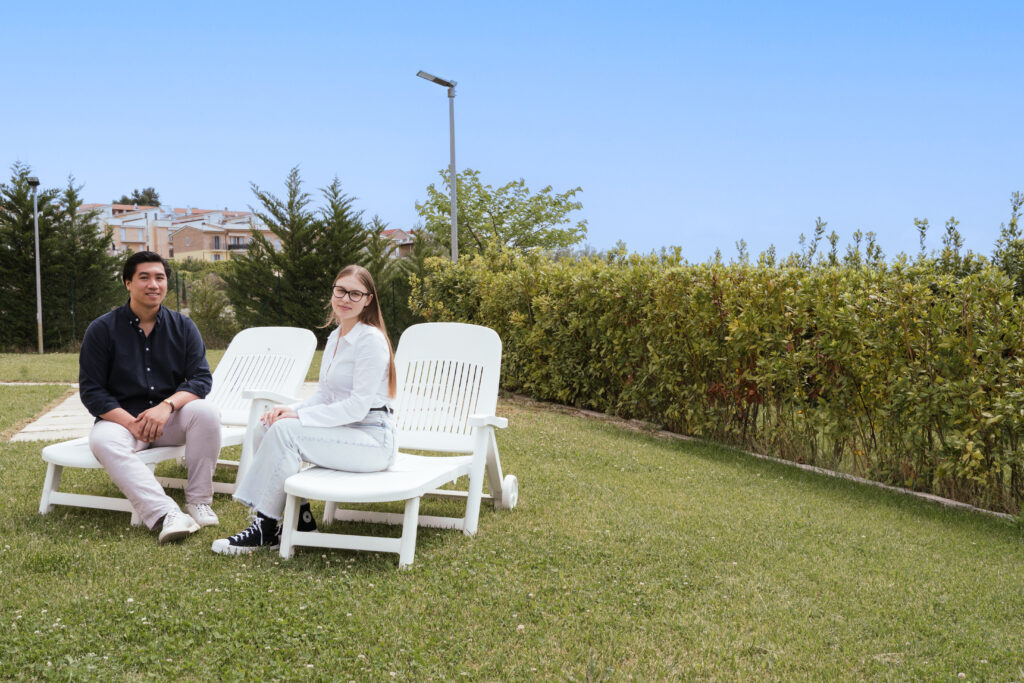
Students stay in fully equipped apartments in the same residential building. The residence is located in a quiet area just outside the historic center ofOffida, in theMarcheregion of Italy. Each apartment has its own kitchen. In addition, all students share a large garden where they naturally spend time together after classes.
The Offida Approach places Residential Learning at the center of its educational model, combining experiential learning, community engagement and authentic Italian living.
Creates Time for Reflection
International residential programmes are intensive. Every day, students attend workshops, visit companies, meet entrepreneurs and work in international teams. At the same time, they discover Italian culture.
After a busy day, students need more than a bedroom.
The peaceful location helps them relax and reflect on what they have learned. Meanwhile, the shared garden becomes a natural meeting place. Students continue their conversations, exchange ideas and strengthen friendships.
As a result, learning continues even after the formal activities end. In fact, many of the best discussions happen during these informal moments.
Builds a Strong Community
Living together is one of the greatest strengths of Residential Learning.
Students do not simply attend the same course. Instead, they share apartments, common spaces and everyday routines. Consequently, they build relationships that rarely develop in a traditional classroom.
Our 2025 course evaluation confirms this result.
- 100% of participants enjoyed sharing the same residence and garden.
- 100% said that living together helped them know their classmates better.
Moreover, many students described the social atmosphere as one of the most valuable parts of the programme.
Residential Learning Encourages International Exchange
The benefits become even greater when students come from different countries and universities.
This turns daily life into an intercultural experience.
Students cook together. Next, they compare traditions. They also exchange ideas about their countries. In addition, they discuss different university systems. Most importantly, they build friendships that often continue after the programme ends.
This type of learning is difficult to create inside a classroom. However, it is one of the greatest benefits of an international programme.
Our questionnaires support this conclusion. In fact, 95.2% of participants said they would like to attend future courses with students from different universities. This result highlights the value they place on multicultural learning.
Residential Learning Promotes Independence
Every apartment includes a fully equipped kitchen.
It is an intentional choice.
Instead of eating every meal in restaurants, students buy food in local supermarkets, cook together and organize their daily routines.
As a result, they spend less money while enjoying everyday life in Italy. They experience the country as residents rather than tourists.
Our assessment confirms this behavior. During the programme, students spent an average of €157 in supermarkets, excluding the course fee.
Moreover, cooking together creates another opportunity for conversation, teamwork and cultural exchange.
More Than Accommodation
Many people see accommodation as a simple service.
The Offida Approach takes a different view.
Residential Learning is an essential part of our educational method.
A peaceful environment encourages reflection. Shared apartments create friendships. Common gardens support informal learning. Private kitchens promote independence while keeping the programme affordable.
Together, these elements create much more than a place to stay. They create a living learning community where students continue to learn, grow and connect every day.